
Connected TV (CTV) advertising refers to video ads delivered through internet-connected television devices such as smart TVs, Roku, Amazon Fire TV, Apple TV, and gaming consoles. These ads appear inside streaming services like Hulu, Peacock, Tubi, Pluto TV, and YouTube TV.
Unlike traditional television advertising, CTV ads allow brands to target specific audiences and measure campaign performance — similar to digital advertising platforms like Meta or Google.
In simple terms: CTV combines the reach and impact of television with the targeting and measurement of digital advertising.
- CTV advertising delivers ads through streaming platforms on internet-connected televisions.
- Brands can target audiences using demographic, behavioral, and household data.
- Campaign performance can be measured using impressions, completion rate, and conversion attribution.
- Many performance brands now run UGC-style ads adapted from social media on CTV.
- Typical CTV campaigns begin with $10k–$25k monthly media spend.
Connected TV refers to any television device that can stream internet video.
Examples include:
- Smart TVs (Samsung, LG, Vizio)
- Streaming devices (Roku, Fire TV, Apple TV)
- Gaming consoles (PlayStation, Xbox)
Consumers now watch a large portion of television content through streaming platforms rather than traditional cable networks.
This shift is what created the opportunity for CTV advertising.
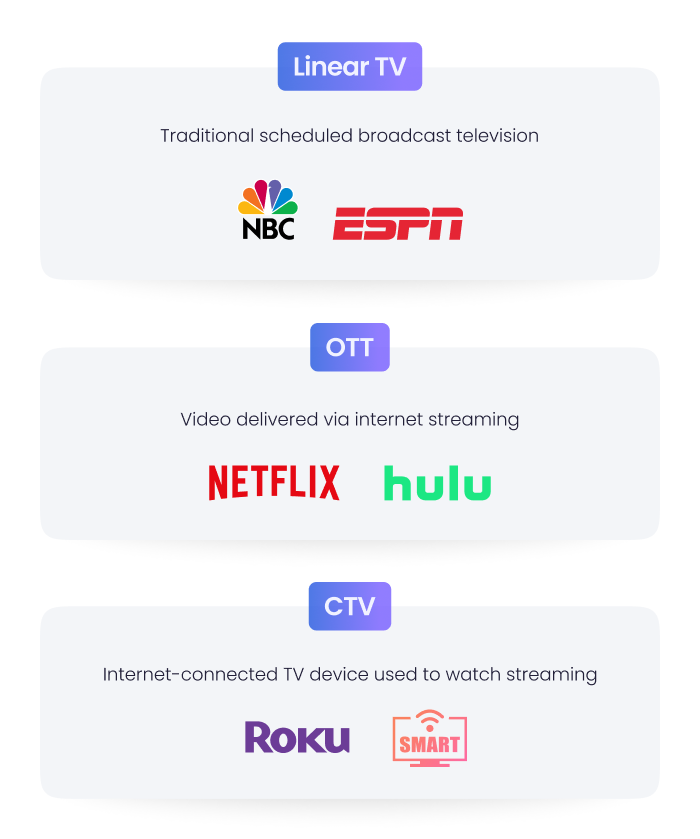
In advertising conversations, CTV usually refers to ads delivered inside streaming apps on television screens.
CTV advertising works similarly to programmatic digital advertising.
1. A viewer starts watching streaming content.
2. The platform reaches an ad break.
3. A programmatic auction selects the ad based on audience targeting.
4. The ad plays on the viewer's television.
5. The platform records performance data.
Unlike traditional TV buying, brands are
Advertisers can target viewers using:
- Demographics
- Geography
- Household income
- Interests
- Purchase intent signals
- Retargeting audiences
- Lookalike audiences
This precision targeting is one of the biggest advantages of connected TV advertising.
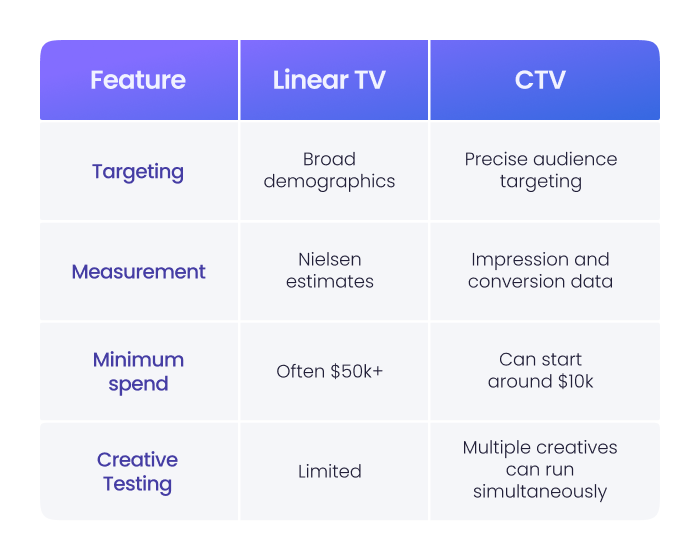
In advertising conversations, CTV makes television advertising accessible to DTC and mid-market brands.
CTV was originally viewed as a brand awareness channel. However many brands now treat it like paid social advertising.
Performance marketers apply the same strategy:
- Test multiple creatives
- Optimize messaging
- Measure CPA and conversion lift
This approach is especially effective when brands adapt high-performing social UGC into CTV creative.
CTV campaign costs include two main components.
Typical CPMs range from $15–$40 depending on targeting and platform.
Most brands begin with: $10,000–$25,000 per month in media spend.
Traditional TV commercials often cost:
$75,000–$500,000+
UGC-based CTV creative is significantly cheaper because it uses existing social content.
Most brands already have the creative assets needed to launch a campaign.
Typical workflow:
1. Identify top performing social video
2. Adapt it into horizontal TV format
3. Add product visuals and branding
4. Launch campaign via CTV media partner
5. Measure performance and iterate
This is the same performance creative loop used in paid social advertising.
Connected TV advertising allows brands to run targeted video ads within streaming platforms on internet-connected televisions. It combines the reach of traditional television with the targeting, optimization, and measurement of digital advertising. As streaming adoption grows, CTV is becoming one of the fastest-growing channels for performance marketers.

